
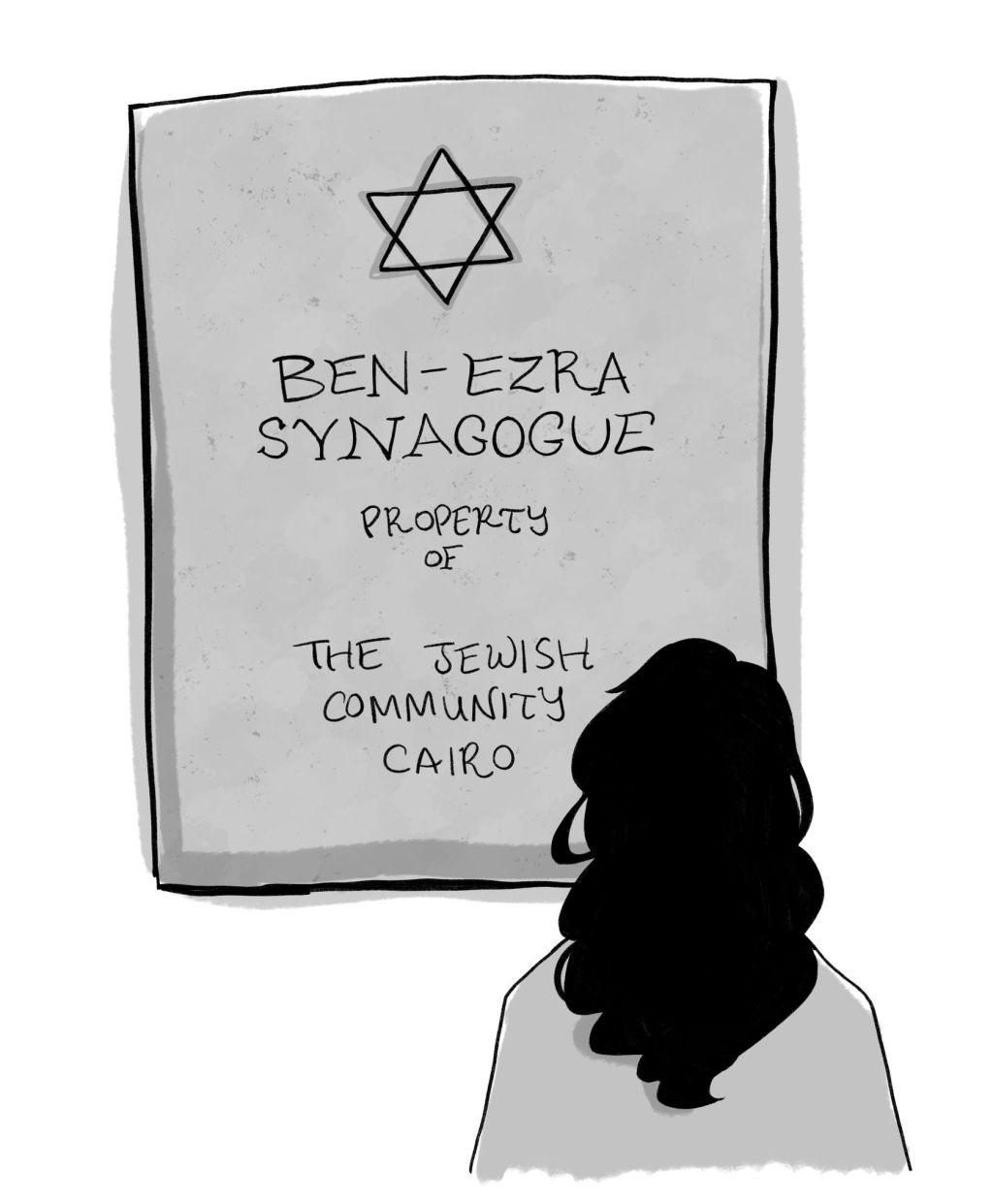
There’s a certain uneasiness I feel whenever the elevator stops on an unfamiliar floor. Like a gambler at a slot machine, I wait for the doors to open, wondering who or what will appear. One cold winter day, to my relief, I hit the jackpot: the doors opened, and my affable next-door neighbor stepped in. As we descended, I remarked on the particularly bitter winter. “In Chicago, you have to earn your summers,” she said. That quip returned with a vengeance when I realized I’d failed to cash in on the Chicago summer I’d earned and instead spent it 880 miles away (1,416 kilometers for the rest of the world) in a last-ditch attempt to learn Italian through a language-immersion program. Yet, oddly enough, my buyer’s remorse wasn’t about the unspent summer per se. Rather, it was about missing the ritual of reading the print Hyde Park Herald obituaries.
Full disclosure: I love life, not death, and the only cemeteries I enjoy are old enough to be called tombs. Still, I’ve long had a fascination with obituaries—originating, I think, from growing up in a rural community, where the death of even one or two people made a noticeable dent in the population and often sparked speculation around the kitchen table about who might acquire their land. Beyond those rather grim and pragmatic reasons, obituaries also offered me a chance to reconnect with figures whose popularity had long since faded but whose lives remained nonetheless interesting. So, when I was first introduced to the Herald, I was immediately hooked and discovered a distinctive genre of obituaries—remarkably rich for such a small community—that I had never encountered elsewhere.
Consider Leah Kadden, formerly part of UChicago’s National Opinion Research Center, who passed away last year at 94. Born in Fischhausen, East Prussia (present day Kaliningrad), in 1929, she endured imprisonment and internment as a child and, in 1939, boarded the infamous MS St. Louis with her mother and brother—only to be denied entry to both Cuba and the United States. After surviving Nazi Germany by living underground in Belgium, then France, and finally Switzerland, she immigrated to Chicago in 1946. Here she built a long life of civic and communal service in Hyde Park: raising a family, volunteering, and contributing to oral history projects and Holocaust remembrance efforts well into her later years.
Less harrowing but no less remarkable is the story of Kenneth Dunn, who recently passed away at 81. Dunn was a true UChicago man—spending his days lecturing on Descartes, Aristotle, and Hegel, and his nights sifting through neighborhood garbage for recyclables, even collecting Chicago police horse manure for its “composting material.” Known as Hyde Park’s “zero waste man,” he founded the Resource Center, the nation’s first nonprofit recycling center, decades before any major cities, let alone Chicago, launched their own programs. He also transformed vacant South Side lots into one of the country’s largest networks of urban vegetable farms.
More recently, there was Andy Austin, the nationally known courtroom sketch artist who drew for cases ranging from mob bosses like Joey “the Clown” Lombardo to serial killer John Wayne Gacy; education reformer Barbara Taylor Bowman, mother of Valerie Jarrett, senior adviser to President Obama; Joe Quincy Varnado, who once served as Malcolm X’s bodyguard and later his barber; and Jerry Butler, who at one time was one of the most popular R&B singers in the country. The list goes on and on.
All of this is to say that, despite spanning only three square miles and sitting relatively isolated within Chicago, Hyde Park has long cultivated a remarkable and unusual crop of people. I would argue, and I am neither the first nor the last to do so, that this is in no small part due to the presence of the University of Chicago and the distinctive community it draws. The University and the neighborhood are, in this sense, culturally inseparable. Yet that very “town and gown” relationship too often goes unacknowledged.
Take the recent news from the Arts & Humanities and Social Sciences divisions of the ominously termed “suspension” or “reduction” of admissions into more than 25 graduate programs. Much ink has and I am sure will continue to be (rightly) spilled on what this means for the University, but far less on what it means for its relationship with Hyde Park. Rather than focusing only on what these programs contribute to UChicago and the cloistered academic community, the conversation should also consider what they contribute to the neighborhood and the vitality graduate students bring to it.
Remember Kenneth Dunn, Hyde Park’s “zero waste man”: before dedicating his life to serving the community, he first arrived in the neighborhood as a philosophy graduate student. The same can be said of many alumni from now-suspended programs, who came to Hyde Park as students and stayed as neighbors, continuing to shape and enrich the community long after graduation. A quick glance at the obituaries in the Hyde Park Herald each month highlights these stories, showing how graduate students’ contributions extend well beyond coursework into lives and careers woven into the fabric of Hyde Park.
All of this underscores a simple truth: even something as seemingly internal as graduate admissions is never confined to the campus. As former House Speaker Tip O’Neill liked to say, “all politics is local.” The same holds here—decisions about graduate admissions reverberate into Hyde Park, shaping not only the University’s future but also the community that surrounds and sustains it.
In that light, if UChicago is not careful, Hyde Park could become less a place of eccentric and interesting characters having existential conversations at Jimmy’s or contemplative walks at Promontory Point, as the obituaries show, and more like any other of Chicago’s neighborhoods. And before I’m accused of being melodramatic: yes, interesting people and places exist everywhere, and Hyde Park does not hold a monopoly on such traits. But spending this summer hundreds of miles away in Vermont reminded me that few places bring them together with the same vitality.
In the end, I realized the summer I had earned and partly wished I capitalized on was not a Chicago summer, but a Hyde Park summer. So, my fellow Maroons, remember this: you attend UChicago but live in Hyde Park, so learn about it, take part in its life, preserve what makes it unique, and above all, enjoy it — you’ve earned it.



 uchicagophoenix.com
Leave a comment