Beyond the Cubicle: Are We More “Normal” than We Think?
This piece was published in The Phoenix‘s Winter 2026 print issue.Read the full issue at uchicagophoenix.com/magazine.
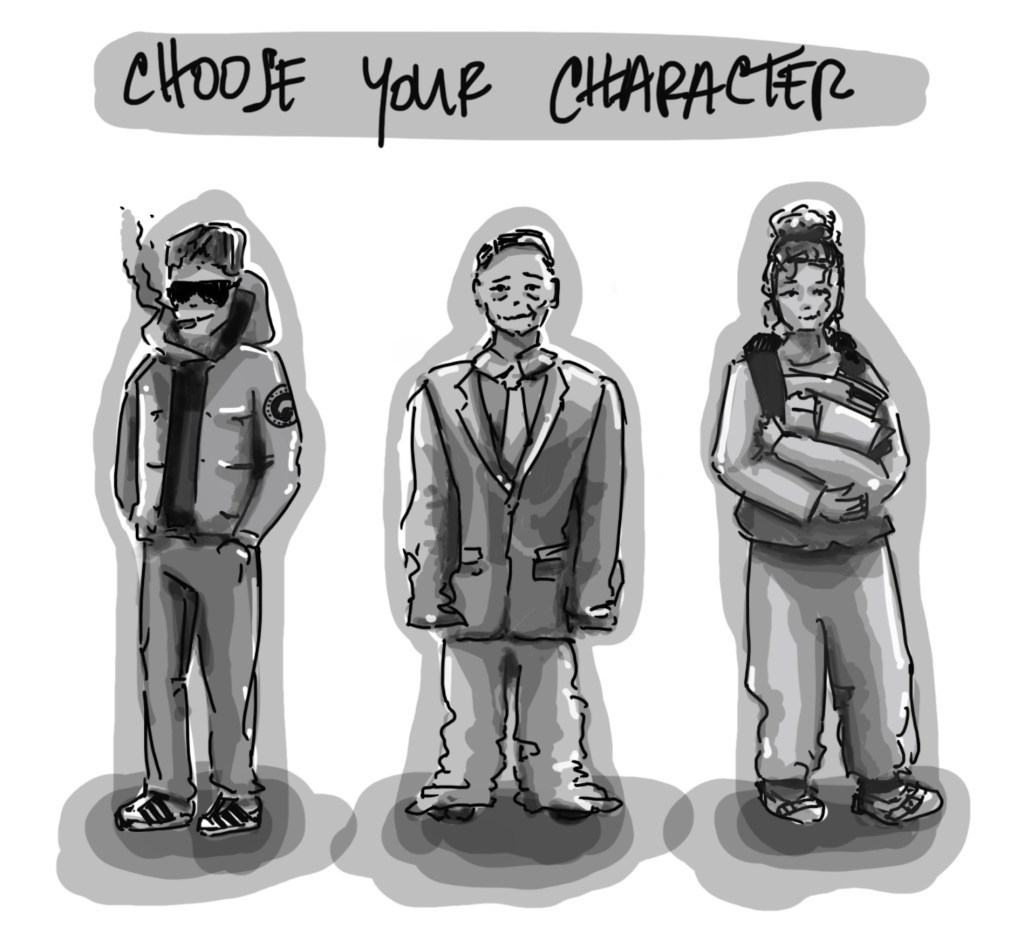
The joke goes that UChicago seeks out a very particular type of person: someone who prioritizes academic validation over a social life, who is career-focused to the point of obsession, and who treats the Reg cubicles as a second home. This character circulates freely through admissions lore, internet memes, and conversations among students, lingering somewhere between caricature and cautionary tale. But does this archetype actually resonate with students? Or is it simply a convenient shorthand, repeated so often that it now feels true?
Coming to UChicago without prior connections or notions of its student culture, this stereotype bears little resemblance to my own experience. More importantly, it bears little resemblance to the people I know. Over the past decades, the demographic composition of universities has changed, especially at elite institutions. Aside from these changes, however, I was told by one Resident Head that the new UChicago student is more “normal” than those who came before. Perhaps, then, in a community built upon intellectual curiosity, the deeper problem is not that the archetype is inaccurate, but that we continue to insist on having one in the first place.
There was no hesitation when I asked students whether a stereotype of the UChicago student exists: each of them agreed that one does. When asked to describe it, they all echoed the same familiar image. “Nerdy, intent on learning—even in my SOSC classes with stereotypical frat boys, they still have pages of notes, and they want to learn,” responded Isabelle, a second-year student studying public policy.
This pattern–of locating the stereotype among “peers” but never among friends-reveals how the stereotype functions at a distance
For Jacob, a first-year student studying physics and math, this stereotype was similarly resonant. “At least that’s the idea I had before I came here. Students are tired, depressed, and hard-working, obviously,” he told me. Others mentioned study sessions that stretch far past midnight, party conversations that drift toward problem sets and readings, and friends who leave functions early to finish homework.
Though students are aware and able to articulate the stereotype of an academically obsessed, socially isolated individual, many are quick to distance themselves from it. When asked whether their proposed archetype reflects the majority of the student body, one student responded, “I don’t think any more than people at other schools. If anything, my friend at Harvard fits way more into the stereotype. He stays up until 4 a.m. doing homework and never goes out.”
When Jamie, a second-year student-athlete, acknowledged the existence of the stereotype, she explained, “I don’t think it reflects my circle, but we’re athletes, so we’re kind of forced to do everything on a different timeline. But then again, even my friends who aren’t on sports teams also don’t fit into the stereotype.” While the University is not a Big Ten school (anymore), student-athletes remain a visible and significant part of the campus population, and their daily lives clearly look markedly different from the archetype in question.
This pattern—of locating the stereotype among “peers” but never among friends— reveals how the stereotype functions at a far distance, acting as a pigeonhole rather than a truism. It helps us to define what one is not, rather than what one is. Moreover, when I asked students to redefine this image, their responses reflected a shared interest in softening the archetype rather than reaffirming it.
“Everyone is just inquisitive and passionate,” one student said. Students are “very hardworking, driven people who want to achieve things,” responded another. A third said, “They are all so passionate and so ambitious, and it’s so rewarding to be around people that are pushing themselves and also uplifting the people around them.”
“The new UChicago student is more ‘normal,’ for lack of a better term”
So, where does the cubicle-dweller come from, and why do we continue to sustain their pseudo-existence? Joshua Moeller, Resident Head and member of the College Student Care and Support Team, emphasized the wide range of attributes of the stereotypical UChicago students: “In my job, I see several ends of the spectrum: at the Center, I see people that [sic] are crippled with anxiety and imposter syndrome because these attributes lead to struggles. But, in my job as RH, I see more of the positive side.”
Further, there is a generational shift. “It used to be that a lot of students were less social,” said Moeller. “The new UChicago student is more ‘normal,’ for lack of a better term.” So, are our predecessors to blame for the negative connotation associated with the term ‘UChicago student’? University stereotypes are uniquely resistant to change because they are produced and reinforced across generations: by alumni, institutional branding, and even self-deprecating humor among students themselves. At UChicago, where rigor and intensity have long been central to the University’s self-conception, these stories are especially durable. The result is a stereotype that persists less as a reflection of who students are now than as a caricature of what the institution once prided itself on being.
The problem is not that the stereotype gets everything wrong, but that it has failed to evolve
Like many campus myths, the stereotype of the nerdy, career-obsessed, socially inept UChicago student survives not through accuracy but through familiarity. The problem is not that it gets everything wrong, but that it has failed to evolve. As new generations arrive and old stories linger, we are left with a choice: to continue furthering a narrative with which we no longer identify, or to allow our University to be as inconsistent, unfinished, and unique as we are.






 uchicagophoenix.com
Leave a comment