


This piece was published in The Phoenix‘s Winter 2026 print issue. Read the full issue at uchicagophoenix.com/magazine.
I think a robot just swept out the em dash from under me. Said my lab manager, “I liked em dashes long before LLMs, but unfortunately, it’s now iconic of GPT, so I’d beware of using them.” I deleted them promptly from my project.
The em dash has fallen out of favor this past year, flagged by bloggers and teachers as a telltale sign of AI-authorship. It’s widely argued that generative AI is thwarting creativity, but it’s doing so in a more insidious manner than one may first think. Not only does it give students a cop-out to developing their own style of prose, but it’s established its own voice, and when it speaks, it threatens the voices of others: it scares the honest writer into submission.
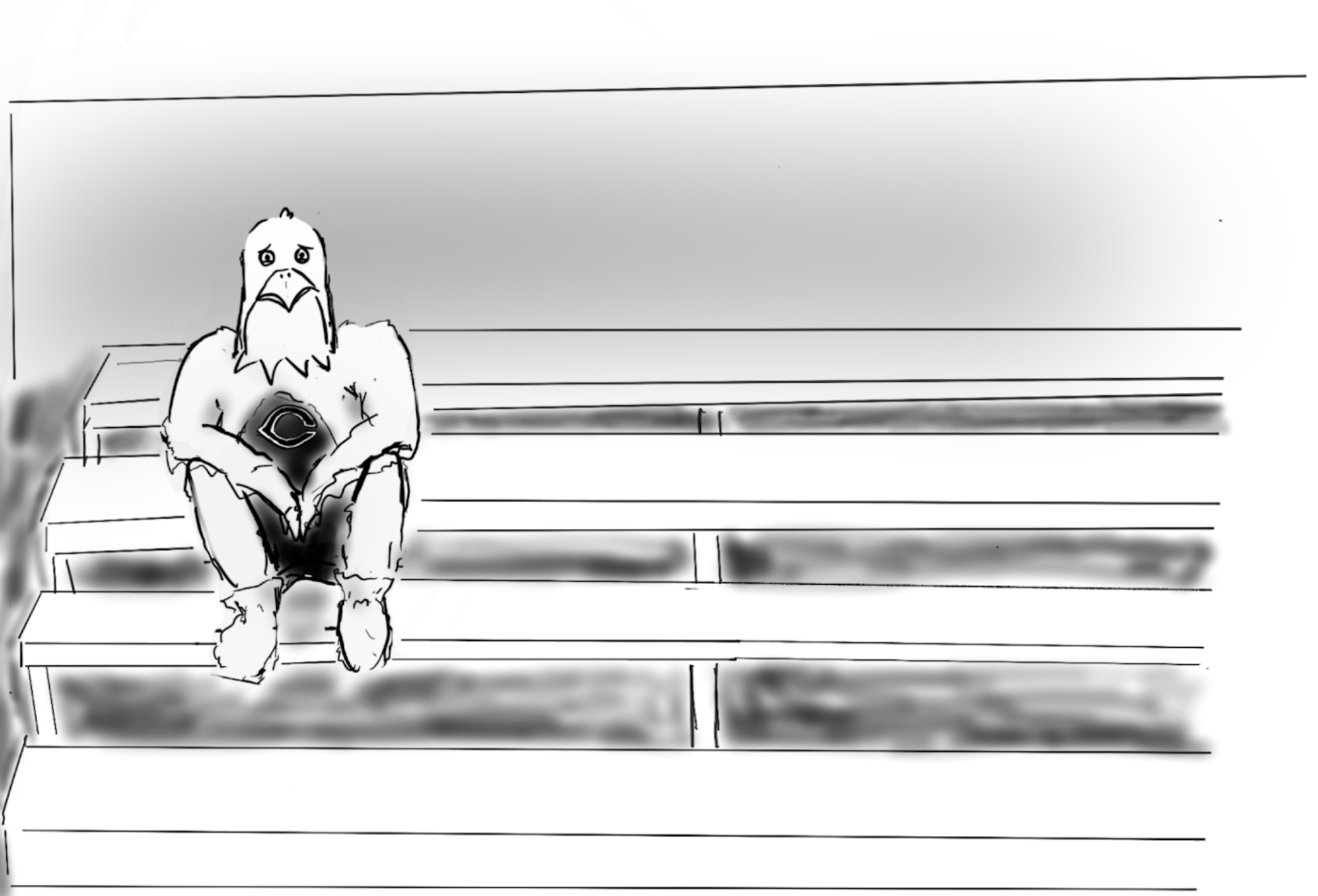
Frightened UChicago students take to a Reddit thread to write their fears in a UChicago thread, asking if they should stop using the em dash after accusations of academic dishonesty. The majority of the replies say no, to preserve the usage if it “feels right”—something ChatGPT hasn’t yet mastered, and can’t. But the fear of the AI-accusation is permeating, in perfect complement with the perennial fear of the professor: that you will cheat. Students now have fewer opportunities to write the traditional essay, where ideas have time to bake and revision allows one to define and redesign one’s voice. Assignments in Core classes have been transformed into oral exams and in-class writes, robbing the writer of the chance to discover himself on the page. And this extends outside of the university, with many colleges and high schools embroiled in this same unsolvable problem.
And when the student does have the opportunity to write, they now face the worry that their professor will accuse them of the very sin they’ve tried so desperately to rid themselves of the opportunity to commit. Reaching for a thesaurus? Don’t bother. It’ll get flagged as AI anyway. If the word “underscore,” “pivotal,” or “harness” seems like the perfect fit, think again. AI likes them, too. And, of course, you can forget about the em dash. Just stick to the parentheses, freak.
Now, the warnings of online grammarians all begin with the same preface: usage here and there doesn’t necessarily mean that AI is behind it. It’s simply overuse that warrants suspicion. But this admonition may be more dangerous than it is helpful. When doubt is sown in the minds of students, they will avoid certain vocabulary, sentence structure, and rhetorical flair. Bold grammarians will begin to shy away from the em dash. The words that describe “optimization” and “potentials,” though perhaps not the warmest or most expressive words in the English dictionary, occupy a distinct and needed function in technical professions. The more robotic accusations cast against them, the less they’ll appear. Vocabulary will become stilted. The fear of sounding like a robot will slowly mold our writing, dictating our word choice and our composition, with or without conscious attention.
Before it was an AI trademark, the em dash was the nineteenth century standard, named for its length of the lowercase Times New Roman m. Its usage has always been polarizing; either it is one’s greatest tool or most hated feature. I, for one, am a fan, but even I am daunted by the possibility that somebody will look at my writing, see an em dash, and see a bot take the place of a writer.
In my class, Literature vs. AI, we are instructed to write every assignment by hand or, for our formal essays, on a running document where our professor can check the editing history for evidence of AI usage. Brainstorms, scratch work, shoddy drafts, and our final product are to be completed here. Though I don’t particularly mind, and I recognize this as a necessary step to prevent unfaithful work, it strikes me that we must operate under a ‘surveillance state.’ In that document, I can use my em dash without fear, but I write knowing that these conditions are fabricated, and that, if ChatGPT could smile, it would, self-satisfied.
What’s so devastating about this impending loss is the writer’s powerlessness to stop the tyranny of the bot. I want to prescribe a remedy, to say that we can “reclaim our language and take back our voices!” But this just sounds silly. If this is to be framed in terms of a “taking back,” then that means the robot has already won, and I don’t think we’re there quite yet. Instead, there must simply be an embrace of the quirks of the English language that the robot happens to have found attractive.
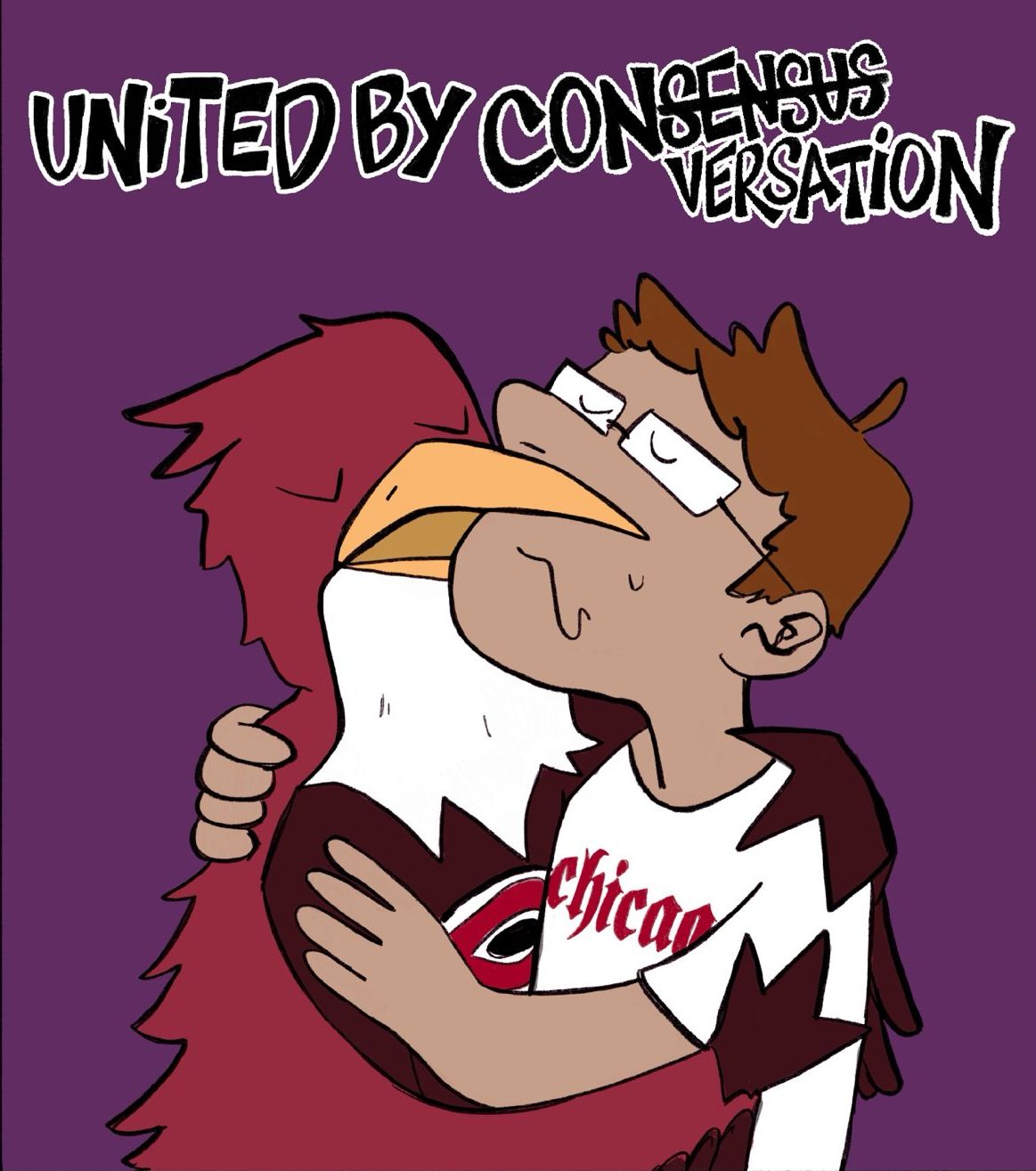
Used intentionally, the em dash delivers more humanity than ChatGPT ever could—it interjects, it disrupts, it sharpens the edges, all with a clean line. Its gracefulness is as close to a transcription of conversation as one can get. It transmits the silence that punctuates what is said between two humans, something that AI simply cannot recognize. The fragmented nature of the fast-moving brain, the nature of your thoughts moving more quickly than your mouth can keep up with, and the element of surprise that accompanies a conclusion or declaration all come from the human. The robot is programmed to model and approximate, to simply perform, and to perform efficiently, at that. We are not. And the em dash is proof.
So if ChatGPT wants to kill off the em dash, it is going to have to kill us first.


Leave a Reply