

This piece was published in The Phoenix‘s Winter 2026 print issue. Read the full issue at uchicagophoenix.com/magazine.
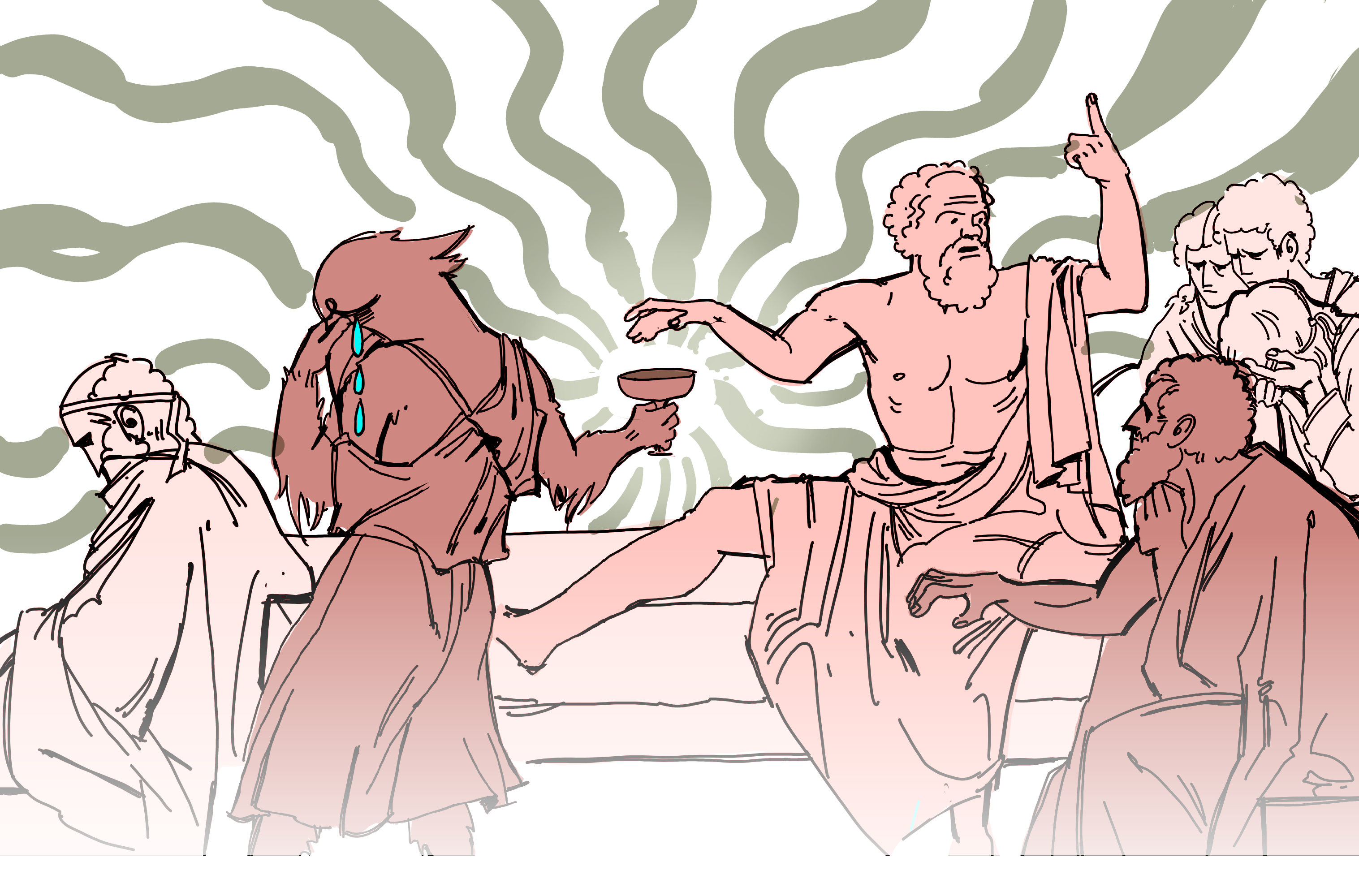
The Kalven Report claims that “a good university, like Socrates, will be upsetting.” Well, as any undergrad who read the Phaedo in their HUM class knows, Socrates paid the price for being upsetting: he was sentenced to death. If the Kalven Committee’s analogy were taken a bit further, it follows that a good university, like Socrates, will be killed.
I, for one, would rather this University not die—and the school’s developments over the last few years reflect a similar preference. In the name of survival, the school has undergone what some would call growing pains (and others, outright mutilations). These changes include the consolidation of the Humanities Division and a whittling of the acceptance rate. This, along with the overall shift toward preprofessionalism, has led many students to ask, “What’s happened to our culture?” and “Why are there so many finance clubs?”
This claim has been worn out, patched up, then worn thin again: the University of Chicago used to be extraordinary and paradigmatic in its pursuit of knowledge, but—largely because of things like the Global Warming course and the specialization in business economics major—it has lost its way. Despite a presumably natural inclination toward progress, students rarely admit to liking this change; most prefer to romanticize a bygone era of the University that ended long before any current student matriculated.
The Kalven Committee wanted the University to be a “community of scholars” on a mission for the “discovery, improvement, and dissemination of knowledge.” Their two-page report never mentions the importance of preparing young people for the workforce. Sadly, a university of this kind simply cannot exist for long. As one first-year to whom I spoke lamented, education without financial pressure is a privilege, and one to which not many are entitled.
Another student, a philosophy major, said that he balked at answering the hackneyed “What’s your major?” question because he was often met with: “I wish I had the luxury of studying the humanities,” or even, “Do you have a trust fund?” These comments are symptoms of a larger shift within university life, and they are not entirely unexpected. They are indicators that we are no longer worthy of the kind of chimeric university described in the Kalven Report.
The claim that we are no longer worthy of perfection may lead one to wonder, as Morrissey once wondered, “Has the world changed, or have I changed?” I, for one, haven’t been thinking about college long enough to change. The world, however, has changed drastically since 1967, the time of the Kalven Committee. It is now—and will continue to be—harder and more expensive to become qualified for a well-paying job. According to a 2024 report from Georgetown University, eighty-five percent of good jobs (with a median salary of $74,000) in 2031 will require a college degree. This is a massive increase from 1967, when the number was less than thirty percent.
Today, the average price of tuition at a private university is $49,320. In 1967, adjusted to today’s dollars, the average cost was $17,636. Considering the striking reality of these statistics, it’s no wonder that many students now see their college years as a means to an end—a sort of “purgatory to life,” as I once heard it described—rather than a time of intellectual formation.
The University of Chicago observed this change in attitude and adapted accordingly. Although the acclaimed Socratic seminar is here to stay, there are signs that UChicago has done away with some of its other Socratic ideals. The original midwife of knowledge, rather than compromise his principles, remained in Athens and suffered the consequences of being “upsetting.” He died for the state but philosophized to the end. The University, on the other hand, refused the cup of hemlock—that is, bankruptcy—and accompanied Crito to Thessaly, or rather, accompanied other “elite institutions” to the land of Financial Marketing, U.S. News rankings, and the Common App.
UChicago has attempted to cherry-pick the best parts of its intellectual past and bureaucratic present in hopes of creating a university that can deftly walk the line. At such a university—at our university—there will always be students on both ends of the spectrum who want more—more exploration, or more efficiency; more culture, or more career advancement. Indeed, both groups end up disappointed, but that in itself is no cause for alarm. At both an academically and career-focused university, students of both disciplines benefit from the presence and contributions of the other.
The UChicago of today provides both the education one needs and the job one desires. This compromise of a university has proven that it need not be as stubborn, nor as upsetting, as Socrates to thrive.





Leave a Reply