


This piece was published in The Phoenix‘s Winter 2026 print issue. Read the full issue at uchicagophoenix.com/magazine.
The writer and known-Freudian Philip Roth, a UChicago alum, once offered the advice that when you write, “you go with what’s alive.” And Vita Excolatur, UChicago’s sex and sexuality magazine, took it. “This publication includes adult content,” reads its now-defunct Blogspot from 2010. “In fact, that’s pretty much the point.”
The magazine ran from 2004 to 2007 and attempted publication in 2008, though it suffered from a lack of interested staff. In 2010, under new leadership, Vita was revived, but its new life was short-lived. The magazine fell out of print in 2011.
UChicago students are masters of the unorthodox story, able to offer glimmers of what it means to be a college student in the age in which they’re writing. Capable of mastering the “Uncommon” essay, students put those skills to good use once they matriculate. Vita proves that the creative publication exists to reflect the preoccupations of the student and to remind editors and readers alike that they are human, that they can enjoy the culture that surrounds them. Without them, a great deal of the student is lost.
Vita’s title, taken from the school motto crescat scientia; vita excolatur, can be loosely translated as “so life be enriched.” A quarterly where full-frontal nudity was greenlit but an erection or intercourse was forbidden, it featured risqué photoshoots in the bookstacks, plenty of how-tos, erotic features, and a “sexiest TA” highlight. The publication was founded in 2004 following the boom of college sex magazines that appeared in 1999. Vita joined the ranks of Vassar’s Squirm: The Art of Campus Sex, Columbia’s Outlet, Harvard’s H Bomb, and Boston University’s Boink: The College Guide to Carnal Knowledge.
Attracted to the irony of a sex magazine where “fun goes to die,” Vita drew the attention of the New York Times. “It’s distinctly U. of C. There’s no Miss January. There’s a hot girl—and she’s reading a book!” said Vita’s editor in chief, Charlotte Rutherfurd, in the 2006 interview. But Vita wasn’t all explicit; in fact, it was known to offer very valuable and enduring cultural advice, such as, “Dinner at a campus dining hall and a movie at Doc do not a real date make.”
To write for Vita was to master the art of the tasteful bookstacks nude, to take painstaking notes on the sex lives of your peers, and to hide your work from your parents and to brag about it to your friends. It was to shoulder the burden of a taboo that, for the first time, you published on the front page. Rutherfurd rarely had trouble recruiting her models, while Vita’s photographer Emma Bernstein faced strange looks at parties, according to the Times.
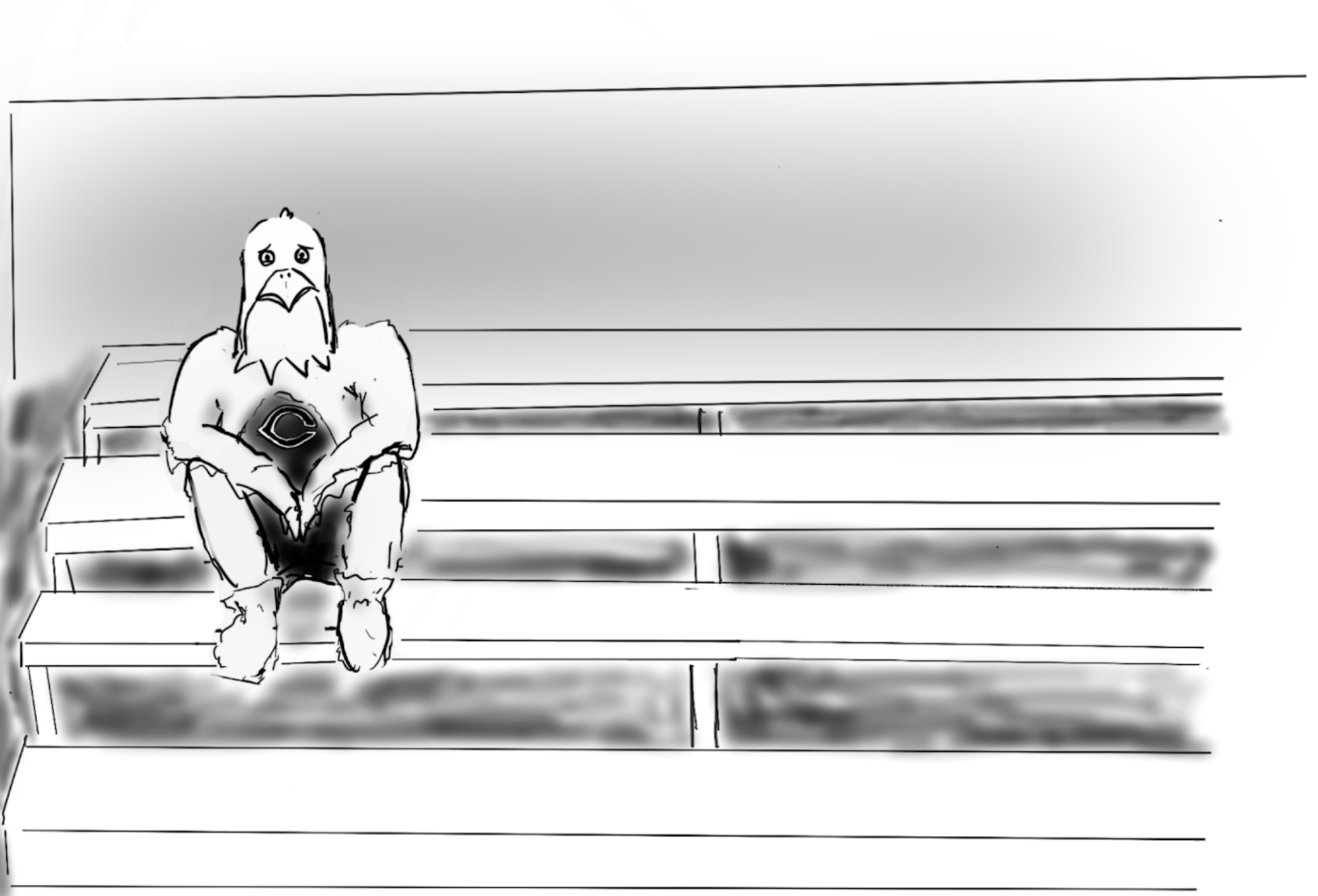
The death of Vita—an ironic but inevitable fate—was in good company. BU’s Boink (d. 2010), Harvard’s H Bomb (d. 2012), and the like comprise the once-flourished sex magazines that saw their heyday at the turn of the century. Around ten years later, they were all put to rest, one by one. They are relics of a different cultural age, one in which print was slightly more in style and in which the sex recession, which has hit Gen Z the hardest, was just beginning.
At the beginning of her second year, Sliced Bread’s editor in chief Josie Barboriak, now a fourth-year, took the reins of the publication after an outgoing editor in chief’s abrupt exit. First published in 2007, the magazine experienced the kind of unavoidable turnover that so easily thwarts student-led publications. “I kind of built it up and got people to come again. These things can so easily almost die. It is so easy for a club like this to almost die.”
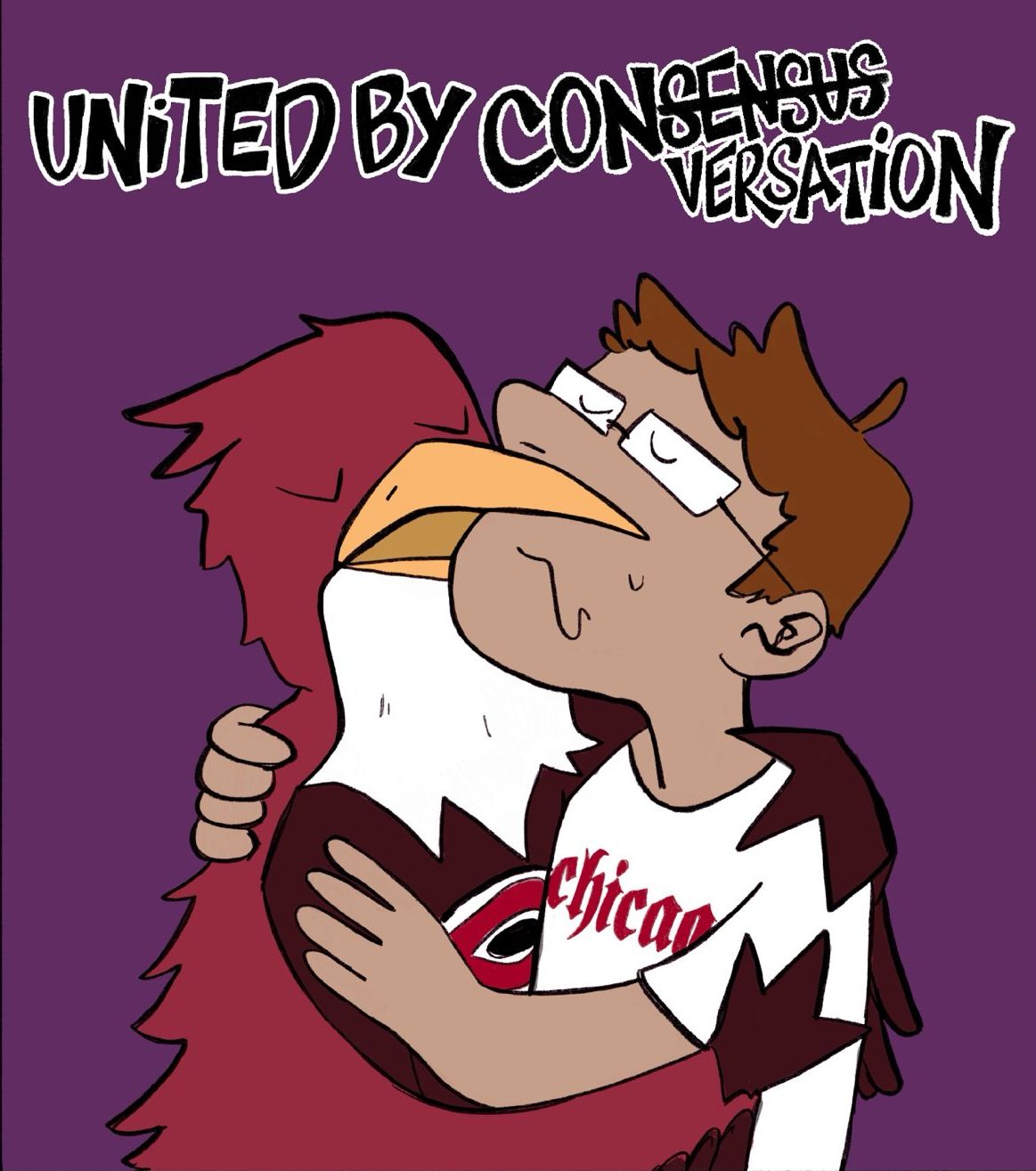
While The Maroon is perennial, one could say that its reliability is its defining feature. As UChicago’s biweekly, it should be. The Maroon fills a distinct role on campus, one of hard facts, (ideally) unbiased reporting, and predictability. Alternatively, UChicago has myriad student publications that, while ranging in character, exist to reflect the cultural milieu. Firebird exists to bring underground music above ground. The Chicago Shady Dealer reflects our longing for humor. Bite translates taste. Sliced Bread displays the tortured thoughts of the writer, the poet, the photographer. The common thread? A creative publication singles out the subjective, and it is the subjective that starts a conversation. A side-splitting comedy special, an overrated restaurant, a concert worth seeing, a protest and counterprotest on the quad, all of this drives the social workings of a community. This sort of cultural connection knows no generational bounds, as proved by the many long-dead publications that functioned to keep alive the person behind the student and the culture that informed him.
The Chicagoan was a wartime publication. It was a bound magazine, containing prose, poetry, and essays. It was serious, but only because it reflected the spirit of the concerned young citizen of 1919. Its 1897 predecessor, The Man-hater, was a once-published periodical written by a nameless editor. Inside its case binding, flaking at the edges, was only half-filled by typewritten fiction. Its stories a bit woeful and somewhat nonsensical, the longest piece was the story of a valiant underdog: the second-string quarterback Quigglesby, who pined after a woman named Ethel, “for he knew he loved her as much as he hated Stagg.”
Then there was the Gamboiler, a humor magazine published in 1946. Its title—meaning one who decides to have fun irresponsibly—adorns a canary yellow cover with fantastical cartoons in a dancing title script. “We think that maybe with all our thinking and studying we are forgetting about people and laughing and doing things. We are even forgetting how to laugh at ourselves,” its introductory letter reads. “We don’t think that liberal thinkers can succeed that way. So we are going to laugh at ourselves and at you and at the big, Gothic University and at the people who run it, whenever we see them being Fascistic.” The magazine wrote on everything from the student housing crisis (the University had not yet expanded to accommodate its number), to a dry criticism of the latest record releases.
The Life of the Mind was a 1968 political manifesto, a product of the counterculture’s hold on the university. Here, UChicago’s Students for a Democratic Society organized protests against Hyde Park’s rent inflation and tenant unions, and provided a “medium through which radicals at the University of Chicago can speak for themselves.”
Today, we boast our fair share of magazines that focus on the subjective, all of which have existed, on average, between five and twenty years. The recent trend is the manifestation of creativity in what we consume—music, food, fashion—not in the body itself, so confirms the death of Vita. Either sex has lost its taboo, its cultural reward as publication not worth the effort of provocation, or it’s become too risky to try.
While these magazines exist to be enjoyed, they reflect a sorry truth. It is untenable for a student to dedicate themselves to what moves them if they wish to pursue the lucrative. Asks Barboriak, “What does society want us to be? Like, at UChicago, we’re supposed to just do the socially reproductive thing and come in, and you get really excited about Plato and everything, and you want to live in New York City. And then you realize, to afford to live in New York City, you have to be an investment banker. So you become an investment banker that thinks about Plato every once in a while.” The publication that exists to provoke and to make think is merely a pastime.
Nonetheless, these pastimes reflect what is in, what is obsessed over, examined, what soaks up the most of social life. That’s part of the reason why political commentary will endure, why humor is everlasting, and sex as taboo comes and goes. There will be a time again in the future when nudity makes a comeback. It will say more about its readers than it does its writers.


Leave a Reply