

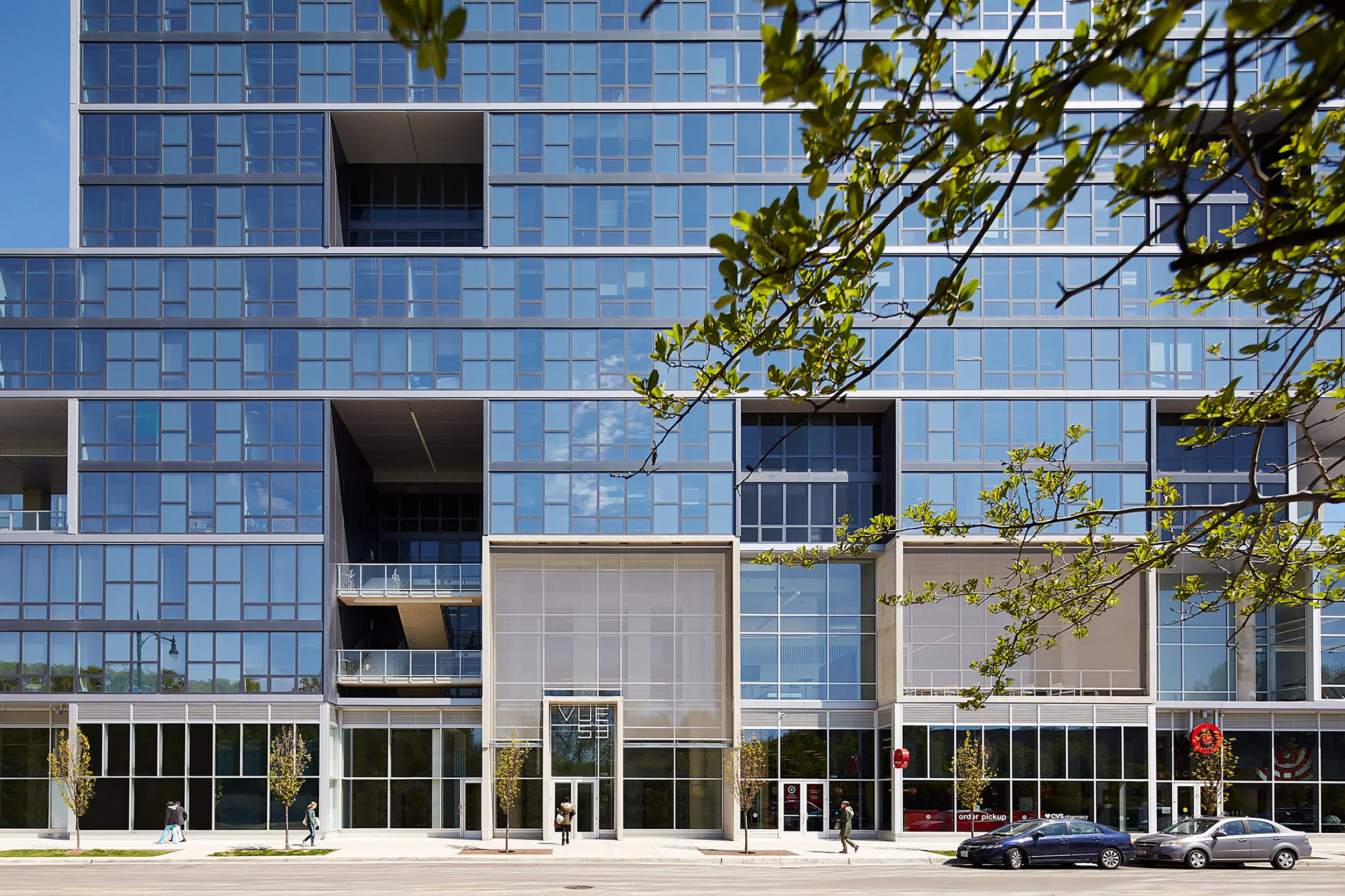
On Thursday, May 7, UChicago Housing and Residential Life announced that rising third and fourth-years who had opted into student housing for the 2026-27 school year could select apartments in Vue53, an upscale apartment building on 53rd Street.
A total of 92 apartments were available: 13 studio apartments, 34 one-bed apartments, and 45 two-bed apartments. The units were priced, per person per academic year, at $13,234, $15,404, and $15,551, respectively. As of writing, while all the studios and one-bedroom apartments had been claimed, 37 of the two-bedroom dorms were still available.
How big a role Housing and Residential Life will play in Vue53 management is unclear: in a March 13 message to students that previewed the announcement, they said the new option would “offer the convenience of academic year accommodations and HRL staffing.” Whether rules like the current dorm guest policy will extend into Vue53 is also to be seen.
The University has had a longstanding relationship with the Vue53 property, as it “owns the land and issued a 65-year ground lease to the Vue53 development team when the project began,” according to The Real Deal. The property has had a complicated financial history: developer Blue Vista took out a $50 million loan to build the project, which they later refinanced with Bain Capital. This ownership team sold Vue53 for at least $57.6 million (though another source placed the sale at $60.5 million) to New Jersey-based firm Antheus Capital, the parent company of Mac Properties, in January of this year.
The University now controls 34 percent of the 267-unit building. UChicago had implemented Vue53 as a housing option starting in the 2017-2018 school year, but they retired it alongside the Stony Island dorm after the 2019-2020 school year. The construction of Woodlawn Commons absorbed those student populations, as the renting of Vue53 was an emergency measure after high yield resulted in a lack of available housing for students.
Coupled with the College’s plans to expand enrollment to 9,000 students, these moves signal that the University is seeking to boost revenue through Residential Life by targeting students torn between on- and off-campus living. The question remains as to whether these steps will relieve the University’s budget deficit.





Leave a Reply