

Welcome to The Phoenix’s weekly digest. Every week during the quarter, you can expect our writers’ takes on some campus happenings.
This week, Alec Stein investigates the effects of the University’s decision to rapidly increase its undergraduate population.
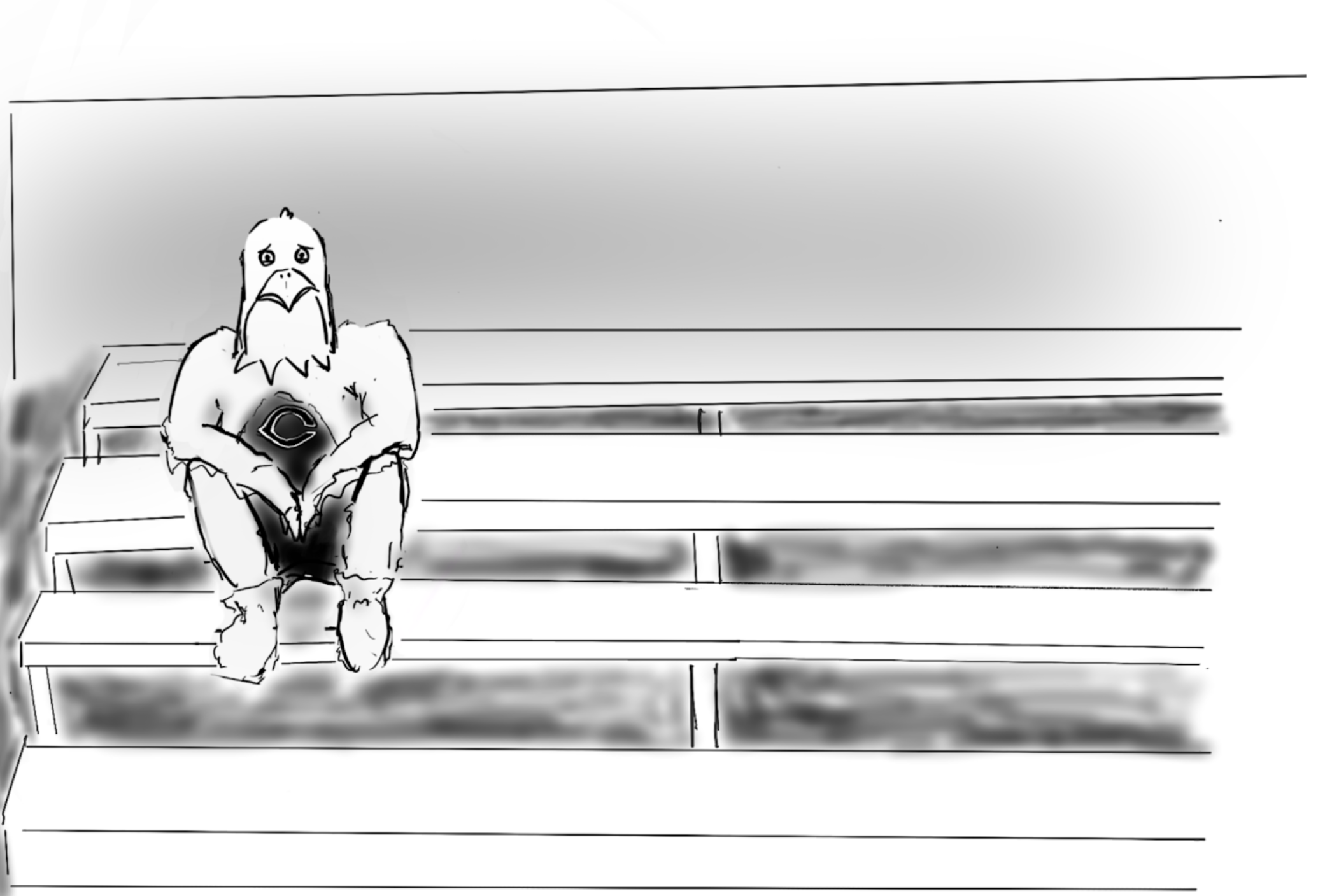
I can’t help but feel a bit of anger as I walk through the Reg these days. Of course, to some of us, this may be the normal course that our sentiments take when confronted with such a domineering monolith; up until now, the strongest feeling I have associated with its concrete blocks has been a meandering disgust mixed with just a little bit of PTSD. Nothing about the Reg’s structural integrity has changed. Rather, the journey to find a seat has suddenly become noticeably more difficult. The administration has increased the undergraduate student body by more than three hundred year-on-year, and its new expansion effort is beginning to bite.
One expects a crowded library during the few peak days of stress leading up to finals, or perhaps the random week five midterm, but now, it seems that nearly every time of the day (barring mornings, when the natural course of action is not to be in the Reg) finds floors one, two, three, four, and five to be incredibly crowded. To look through A-Level is practically hopeless at this point, and I am relegated to a stumbling descent towards B-Level or a creeping walk through the stacks to find a seat.
The other libraries have responded variably to this increase in enrollment. Crerar seems to be in a state of perpetual equilibrium— known and frequented by those who favor it, yet rarely a pit stop for those outside of its gravitational pull. The spacious library is actually quite nice, even if it does feel like the progeny of North’s interior design.
Harper seems to have grown unpleasantly more crowded since my first year, when at times I would be the first to enter and the last to exit. This, to me, is a shame—part of the eminence of such a place is its ability to project vastness upon the lone traveler. But, that being said, it has much more of a shared-table ethos than the Reg, so such an increase is much more manageable.
Mansueto remains, as always, a crowded space for those who like being watched while they work. The reading room above the ISAC is niche for those of us who like to think ourselves special and persists relatively unimpacted by the tsunami that has hit the Reg (and, to a lesser extent, Harper).
The pace of life inside the Reg represents its exterior: the boggy, slow, utilitarian work that constitutes the greater portion of boredom we experience here. It’s a place to get it done, but it’s also a place that, to me, has always provided a balance conducive to productivity. That is, for the vast majority of the year, the number of people in the building and on each floor remains enough to feel lively—and, crucially for any who consistently procrastinate, to feel watched—but not enough to feel crowded, to feel that the only available space is next to a group of three friends and three strangers. Now that these chairs are occupied, one feels a little overwhelmed by the amount of people; those spaces of study that had been incorporated into a routine are now suddenly gone; your spot, your table, is occupied by another. Is that not a shock to the system?
I still frequent the Reg, because even given its crowdedness, it remains the shortest path to the studiousness necessary for success here. But increasingly, I’ve found myself forced to experiment with substitutes— on the quad, in Hutch, on the top floor of the Classics building. Locations relatively out of my way and difficult to get to, trying my best to curate an effective environment of study. I know this is affecting my productivity, and that’s part of the reason I’m so angry. And I doubt I’m the only one who feels this way— a short survey of those who have tried to get a cubicle in the past few weeks finds similar results.
In other words, by trial-and-error (mostly just trial, really), our administration has found the carrying capacity of the Regenstein Library, this architectural marvel that has suddenly found itself spilling over the edges. Perhaps we should speak of other carrying capacities; of classes or classrooms and even of athletic facilities. But few things are so universally experienced as the Reg, and I think in many ways it serves as shorthand for what might, if not planned for, happen to many of the other experiences curated by this school.
Anyways, enough with feelings and the statistically insignificant sample of myself. Let’s divulge the cold, hard facts. The University recently released its Autumn Quarter 2026 census report, so we’ve gone through the trouble of graphing out a ten-year trend line for a few major categories: size of university population, size of college population, and, importantly, how many new students (and transfers) were enrolled for each year.


Note the plateau in college undergrad population for the first half of this decade; a result of Dean Boyer’s now-forgotten claim that the growth of this institution would halt at seven thousand students. Now we want growth, with an eye on the soon-to-be-forgotten marker of nine thousand. If we are already feeling the pinch of expansion, it is not far-fetched to say that this push will hurt future classes even more— especially with an administration that seems increasingly forgetful. Alas.
Theories such as carrying capacity have a long and fairly dark history—I cannot help but think of those ridiculous ideas about the Aztec empire that posited cannibalism to be the crutch upon which its population pressure rested. Let us hold back from being an oracle of doom. If there is one thing we can say of humans, it is that we will adapt. Yet, nonetheless, I feel that the erosion of our shared spaces will happen gradually, or at least in such fits and starts that the student in our nine thousand (and growing!) undergraduate population will carry through much as we do today; only they’ll be relegated to studying in the prison of their dorm rooms.
Stay tuned for next week’s edition. In the meantime, if you have any thoughts, disagreements, or words of support, we want to hear them! Write to us at thechicagophoenix@gmail.com.



Leave a Reply