

In 2024, the University of Chicago launched an aggressive, four-year plan to tackle a crippling financial deficit. Part of that plan: a twenty percent enrollment expansion that would increase the University’s undergraduate population to nine thousand students. The University has not yet released this year’s enrollment numbers, but the consequences of a larger incoming class are already surfacing in student housing.
Starting this academic year, the University has begun housing an undisclosed number of incoming students in the off-campus building Vue53. Housing and Residential Life did not respond to a request for the breakdown of students living in the building by class year.
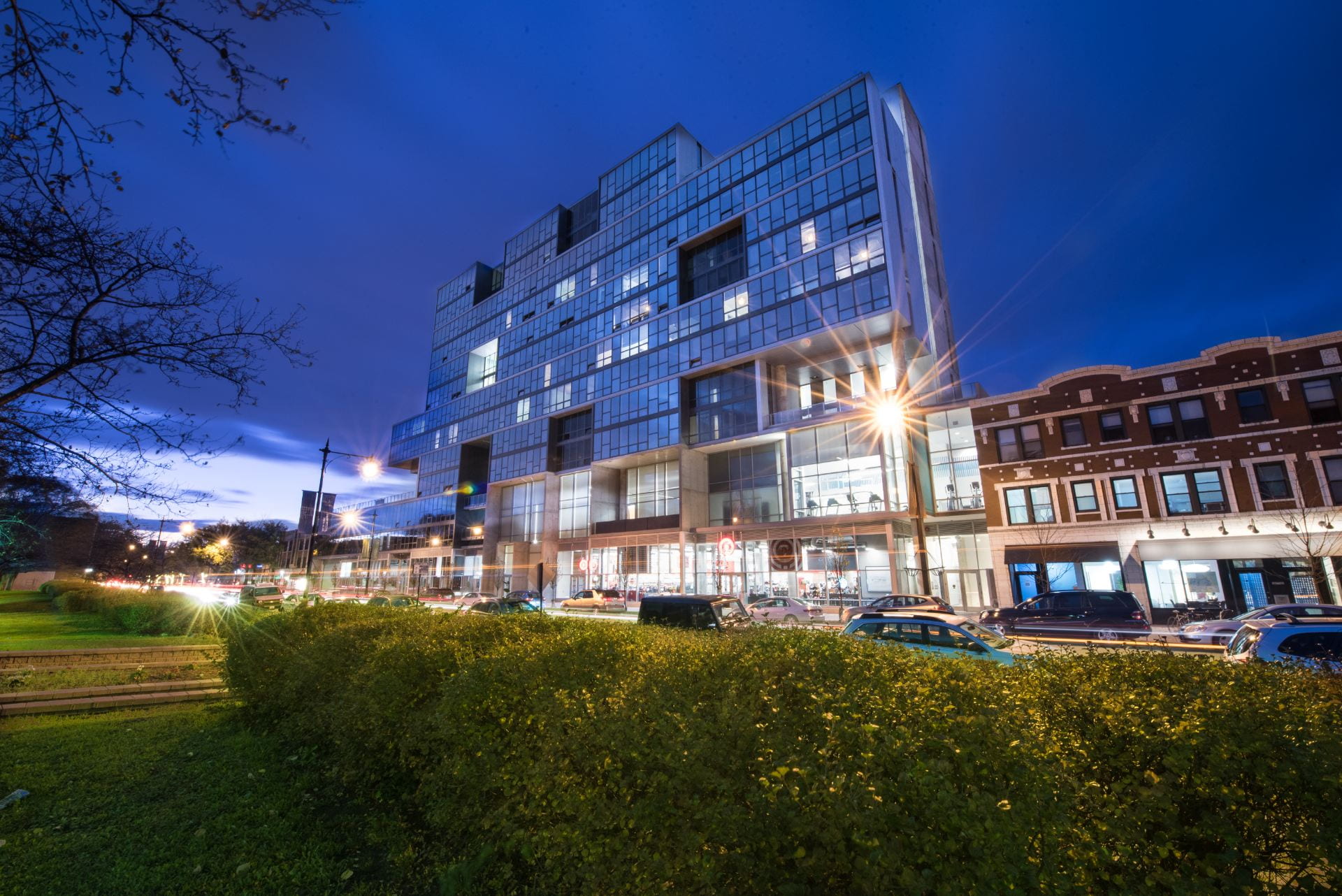
Vue53 is an upscale apartment complex located on 53rd Street, where UChicago currently rents out 267 total units. The University controls 34 percent of the building, a mix of studio and two-bedroom apartments, while the rest is open for the public to rent. The University’s formal relationship with the property began in 2017, when returning students who opted into on-campus housing received notice that Vue53 would become another “on-campus” option.
Occupying eight floors, the building’s student residential house, aptly named “Vue53,” operates similarly to other dorm houses on campus. It is equipped with Resident Heads and Resident Assistants, hosts student social activities, and benefits from a lounge and study center. I sat down with Vue53’s house president, second-year transfer Leo Postnykh, to hear about his experience living there and fostering a community in the building.
“People got blindsided,” Postnykh told me. As a new student, he expected traditional on-campus housing, as students have for countless years at UChicago. He states that he received no email notification about his placement in off-campus housing. He didn’t receive a house tour either, and couldn’t find the building listed as a housing option on the University’s website. Now, the University has updated the page.
Despite his unexpected predicament, as a transfer, Postnykh sees advantages and drawbacks to his placement. “Vue gives you a way to be involved in social life on campus while still having your independence,” he said. On the other hand, given its distance from campus and private bedrooms, Postnykh believes it is easy to become isolated if you are not social as a new student.
For his part, having spent time living on-campus during a summer course, Postnykh is satisfied with his placement in Vue53. He says the building is new, he has in-unit laundry and he enjoys the benefits of both a private bedroom and bathroom. No doubt, it is more than most students can say.
Like houses in traditional, on-campus dorms, Vue53 House is finding its own culture. Postnykh has started by distributing flyers and holding study breaks, weekly meetings, and social events; most recently, a Korean BBQ mixer on the building’s terrace. He says involvement varies by week, but he hopes to increase the number of students participating in house activities.
Postnykh has not yet seen much of an issue with the distance from campus. “I enjoy walking,” he says, “but I suppose it depends on the person.” Nevertheless, he agreed that winter would change things—Lime scooters fall prey to black ice, and below-freezing temperatures threaten the 20-minute walk to the Quad.
The building itself has a number of security measures: it has a 24/7 reception desk, a strictly enforced guest policy, and digital keys for hallway and street doors, like all campus dorms. He suggests additional amenities for Vue students to help offset these challenges, perhaps extended hours or an extended radius for Ride-Share access. Conversely, Postnykh points out that their easy access to downtown Hyde Park does help increase resident proximity to cafes, restaurants, and shops and gives students a social outlet that is not necessarily tied to the University.
As more students arrive in Hyde Park year-over-year, we do not know whether the college plans to rent out more apartments at Vue53 or to find a more permanent housing solution for its growing undergraduate population. (Housing and Residential Life has not yet responded with comment to clarify the future of student placement by the time of publication.) With housing capacity at over 99.7 percent, the University faces a challenge of its own making. And the pressures of increased enrollment have only just begun.




Leave a Reply